
AI-Powered Expense Management:
How Singapore SMEs Can Automate Financial Clarity
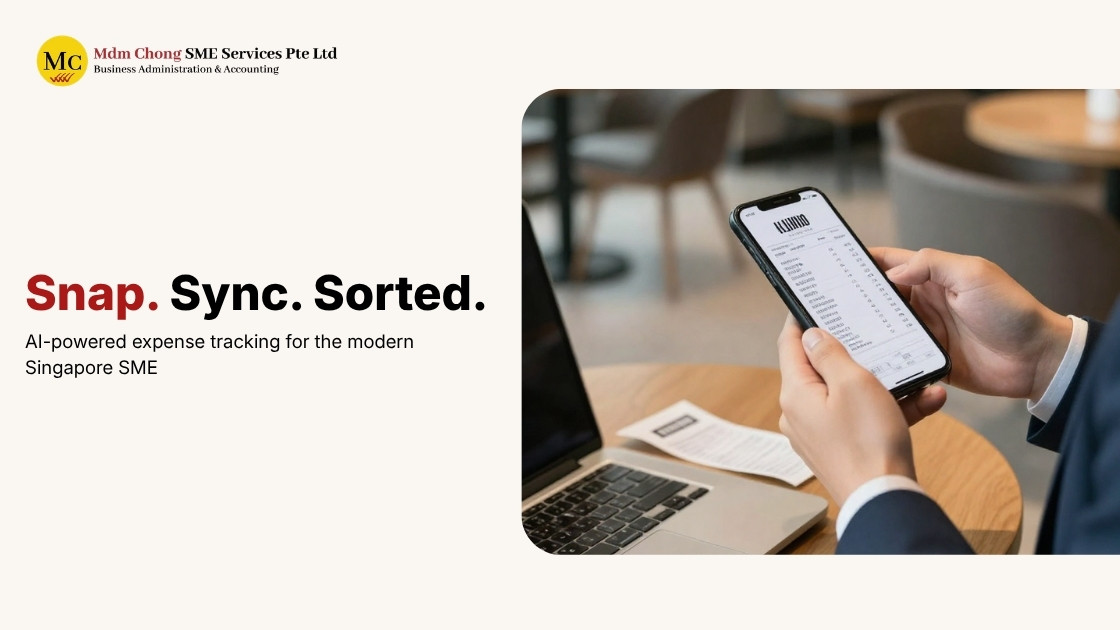
In the fast-paced business environment of Singapore, managing expenses is often the most tedious part of a founder’s day. Traditionally, expense management meant a shoebox full of thermal paper receipts, manual data entry into spreadsheets, and the inevitable human error that follows. However, as we move through 2026, AI solutions to streamline expense management have shifted from a “luxury” for tech giants to an “essential” for local SMEs and startups.
For a Singapore-registered company, every dollar needs to be accounted for, not just for internal profit margins, but for strict IRAS compliance and GST reporting. By leveraging Artificial Intelligence, businesses are transforming their back-office from a cost center into a source of real-time intelligence.
The Evolution: From Manual Entry to Autonomous Accounting
The primary goal of searching for AI solutions to streamline expense management is usually to reclaim time. In the past, an employee would spend hours at the end of the month filing claims, and an accountant would spend even longer verifying them.
Today, AI-driven platforms use Optical Character Recognition (OCR) combined with machine learning to “read” receipts. When you snap a photo of a lunch meeting receipt in CBD, the AI instantly identifies the vendor, the date, the currency, and even the tax amount. It then automatically categorizes the expense under “Travel & Entertainment” or “Client Meetings” based on your company’s historical data.
Top AI Solutions for Singapore SMEs in 2026
If you are looking to modernize your financial workflow, these are the leading technologies currently shaping the market:
1. Integrated Cloud AI (QuickBooks & Xero)
Modern cloud accounting software now comes with native AI assistants. For instance, QuickBooks Online uses AI to predict matching transactions between your bank feed and your uploaded receipts. This “auto-matching” feature ensures that your books are reconciled daily rather than monthly.
2. Specialized Expense Engines (Aspire & Spenmo)
Singapore-based fintech platforms like Aspire 或 Spenmo offer integrated corporate cards. The AI here works at the point of sale. The moment a staff member swipes a card, the AI pushes a notification to their phone asking for a photo of the receipt, instantly tagging the department and budget code.
3. Intelligent Audit Tools
Advanced AI solutions now go beyond just reading data; they audit it. AI can flag “out-of-policy” expenses (such as a weekend purchase or a duplicate claim) before the reimbursement is even processed. This level of corporate governance is vital for SMEs looking to maintain high standards of financial discipline.
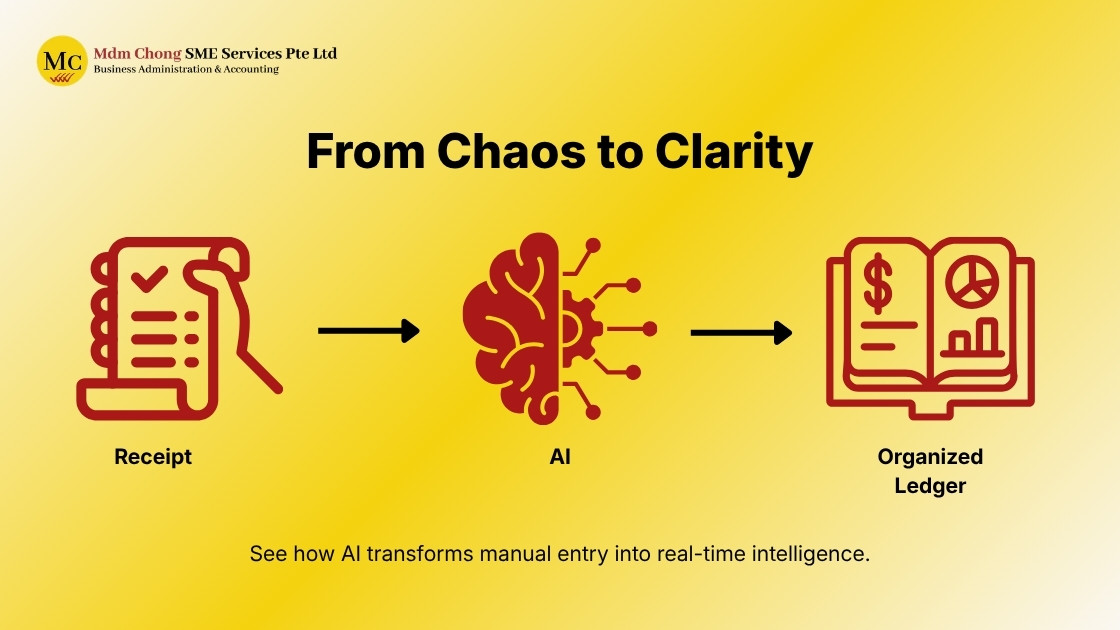
Why AI-Driven Expense Management Matters for IRAS Compliance
In Singapore, the Inland Revenue Authority of Singapore (IRAS) has clear guidelines on record-keeping. Using AI solutions to streamline expense management doesn’t just make life easier; it makes your business more “audit-proof.”
- Digital Archiving: AI tools store high-resolution digital copies of receipts, satisfying the 5-year record-keeping requirement without the need for physical filing cabinets.
- GST Accuracy: AI can distinguish between GST-registered and non-registered vendors, ensuring that your Input Tax claims are accurate and reducing the risk of penalties during an audit.
- Real-time Oversight: With AI, your “Profit & Loss” statement is always live. You can see exactly how much has been spent on marketing or logistics this morning, rather than waiting for a report three weeks into the next month.
Overcoming the “Human Element” in Expense Tracking
The biggest hurdle for most SMEs isn’t the technology, it’s the adoption. Employees often view expense reporting as a chore. AI removes this friction by making the process “invisible.” When the system is easy to use (like sending a WhatsApp image of a receipt to a dedicated bot), compliance rates skyrocket.
By implementing these AI solutions to streamline expense management, 钟会计企业服务 helps businesses move away from reactive accounting. Instead of looking at what happened last month, business owners gain the clarity to decide what they can afford to do tomorrow.
Conclusion: Embracing the Future of SME Finance
The shift toward AI is not about replacing the human touch; it’s about empowering it. When your team no longer spends 10 hours a month on manual data entry, they can focus on strategic growth, customer acquisition, and scaling operations.
In 2026, the competitive edge for Singaporean SMEs lies in operational efficiency. Choosing to automate your expense management is the first step toward a more transparent, compliant, and sustainable business model.